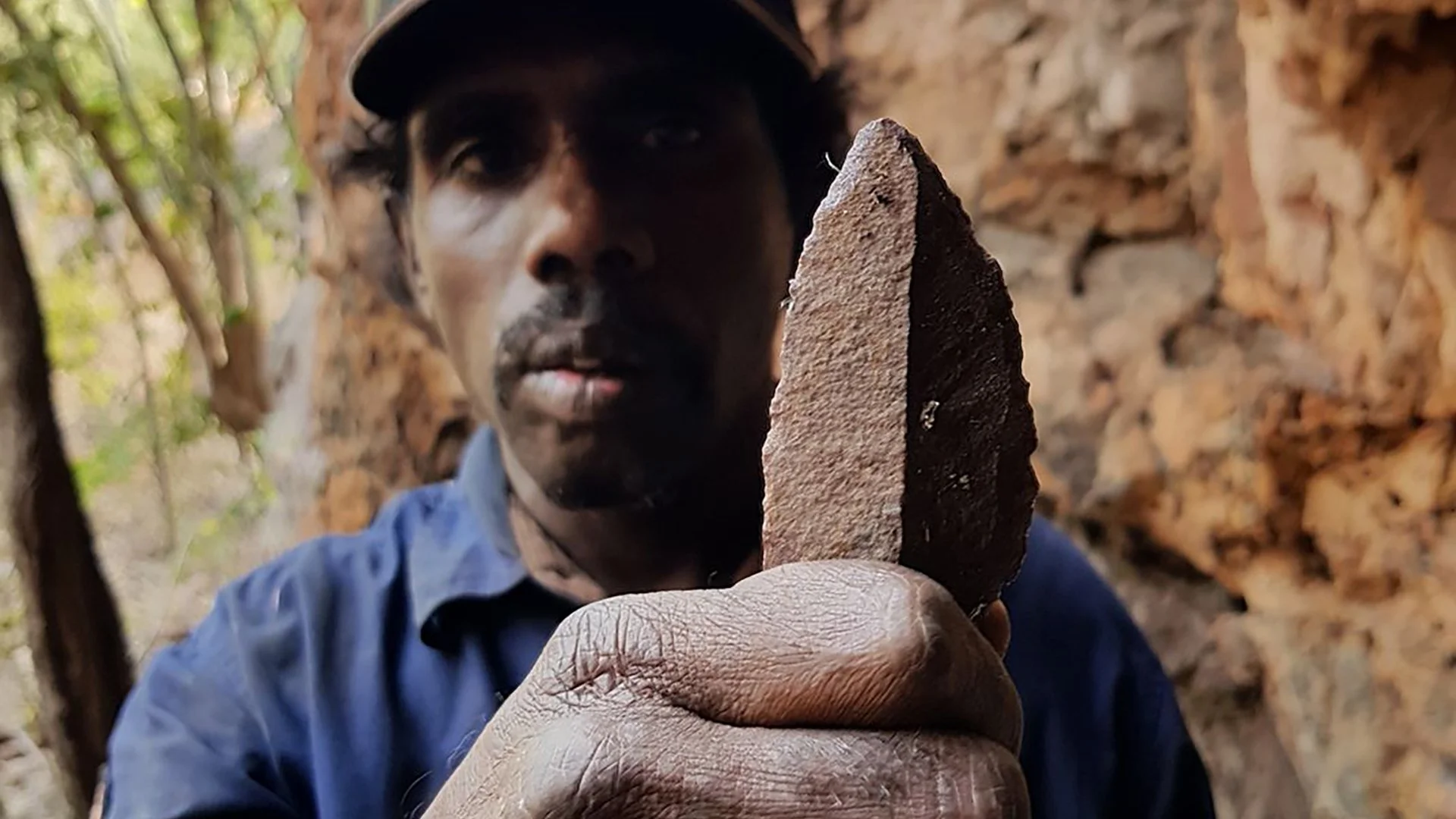
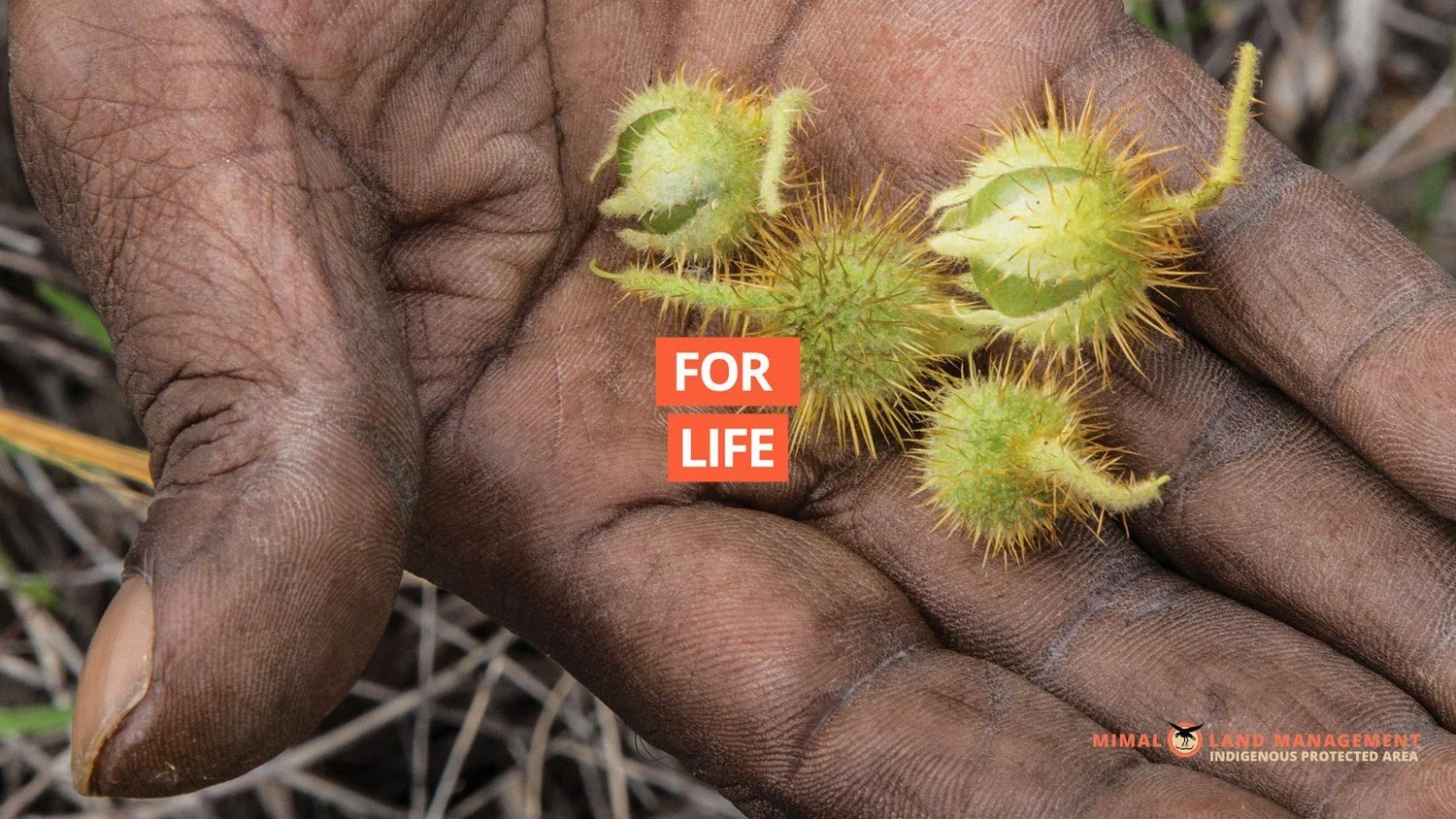
The Mimal Indigenous Protected Area (IPA) is managed for conservation, for country, for culture and for life.
The Dalabon, Rembarrnga and Mayili landowners and custodians of the Mimal management area have an unbroken history of connection to country and caring for country.
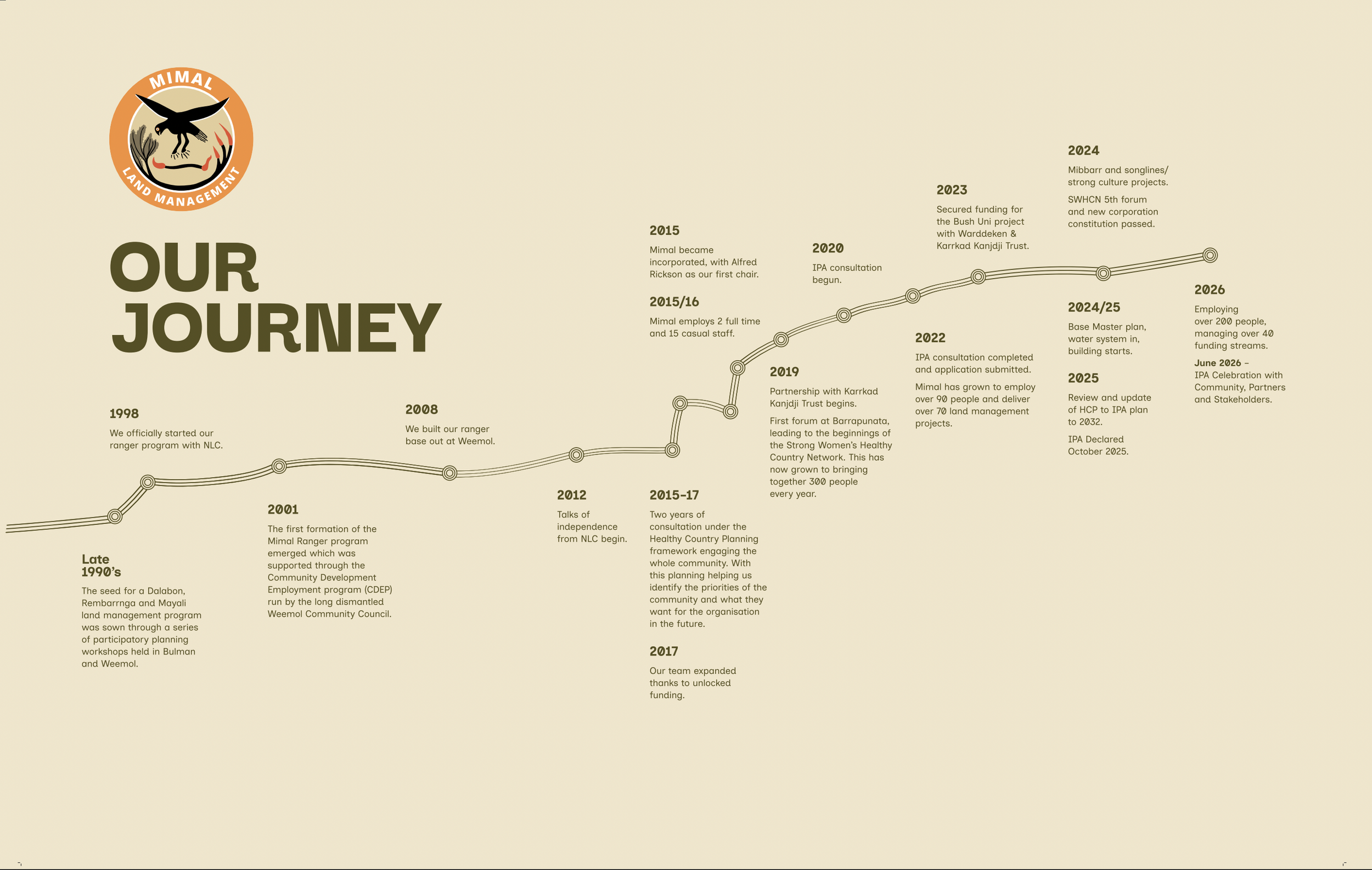
Caring for country work in the Mimal area has been undertaken through ranger programs in various forms since the late 1990s. This continued with the 2015 formation of Mimal Land Management Aboriginal Corporation (Mimal). Mimal works for the Dalabon, Rembarrnga and Mayiili landowners and custodians in achieving their vision for healthy country.
The Mimal Indigenous Protected Area (IPA) was formally proclaimed on 24 October 2025. This means the Dalabon, Rembarrnga and Mayili Traditional Owners and custodians of the IPA area and Mimal have declared their commitment to manage the land for the conservation of biodiversity and cultural values.
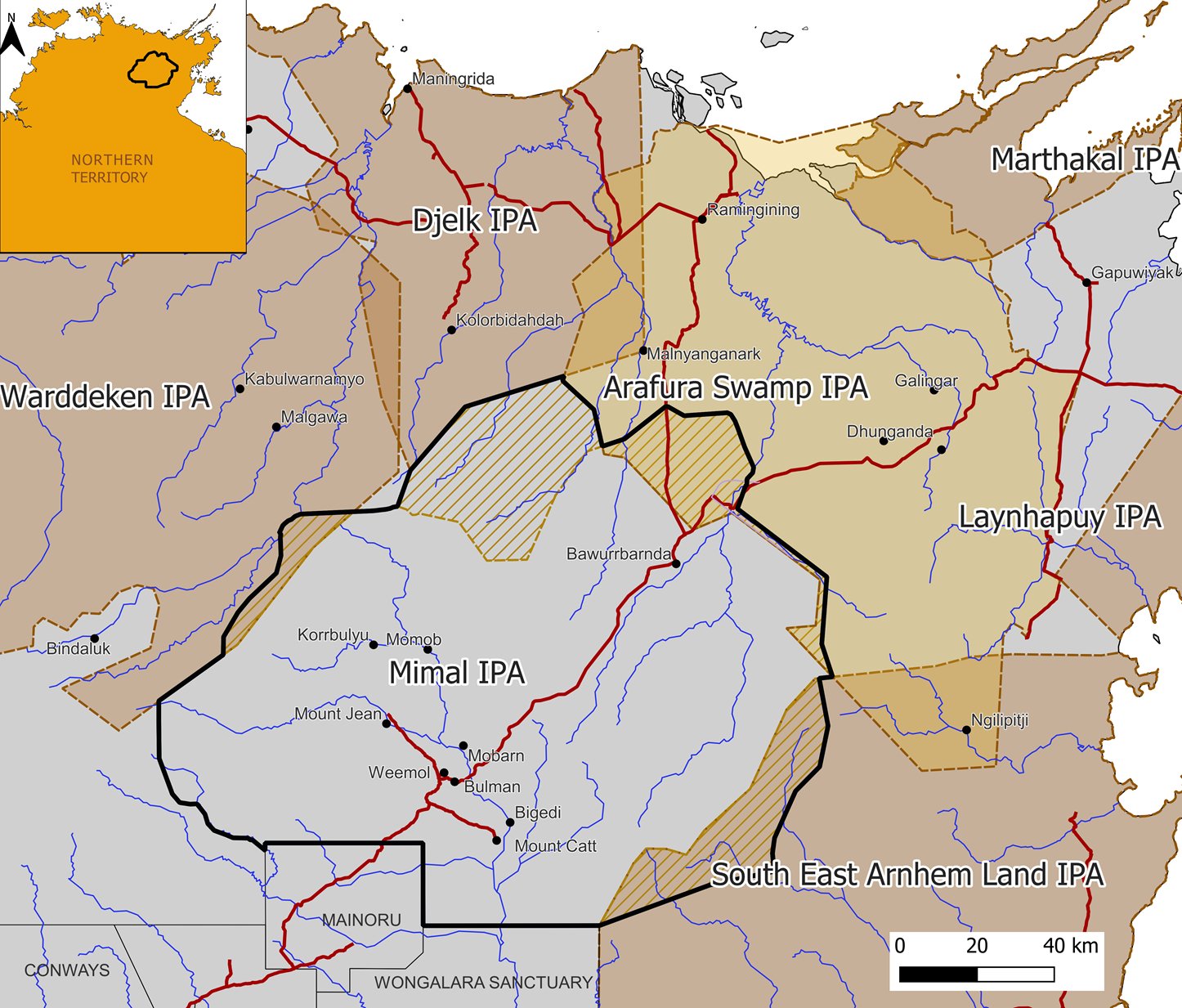
The Mimal IPA covers 17,188 square kilometres in south-central Arnhem Land, part of the Arnhem Land Aboriginal Land Trust. The IPA is listed on the National Reserve System and is managed in accordance with internationally agreed protected area standards and guidelines.
Mimal's work is guided by our Plan of Management that outlines the strategic direction of the Mimal traditional owners and custodians.
Mimal IPA
The Mimal IPA is in the geographic centre of Arnhem Land. The area is covered with places of significance, including rock art sites, dreaming lines and sacred places linked to spiritual ancestors.
It features a network of large rivers, including the headwaters of the rivers flowing into the Gulf of Carpentaria including the Rose, Phelp, Wilton and Mainoru. The region also features the north flowing rivers, Mann, Blyth and Goyder, along with the headwaters of the Arafura Swamp catchment.
Its biodiverse landscape includes grassy plains (ruwurrno and rorrobo), woodland and forest areas (berrhno and mininyburr), freshwater country (djula and wah) and rock country (badno and ngalwad). Across the area, nine species are listed as threatened, including the Northern Quoll, Gouldian Finch and Leichardt’s Sawfish. Two curlew species are listed nationally as critically endangered, three species are listed as endangered and 12 as vulnerable.The area’s natural and cultural assets are managed by Mimal Rangers on behalf of and in cooperation with landowners and custodians.
Under our Plan of Management, the rangers manage land, water and fire, and conduct wildlife protection, monitoring and revegetation programs, weed and feral animal control, and carry out rock art, cultural history and language projects, and learning on country education programs with school children.
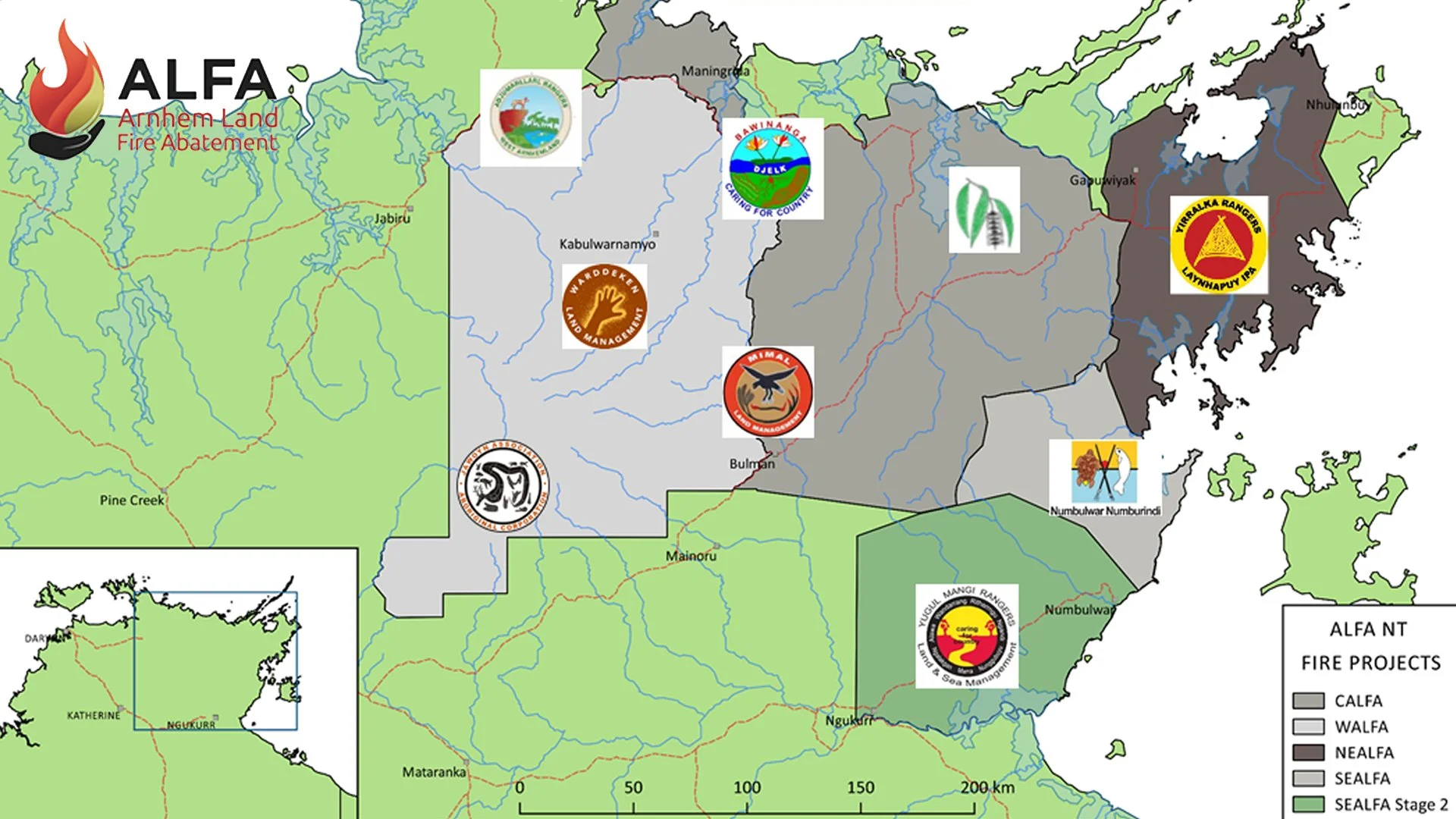
The IPA overlaps with others including Warddeken, Djelk, South East Arnhem Land, and Arafura Swamp Rangers. It also borders the Australian Wildlife Conservancy’s Wongalara Sanctuary.
The Mimal IPA adds significantly to national conservation and, in conjunction with neighbouring IPAs and sanctuaries, substantially increases the reservation of the Central Arnhem bioregion and creates one of the Northern Territory’s largest Indigenous-owned conservation corridors
Fresh. Life.
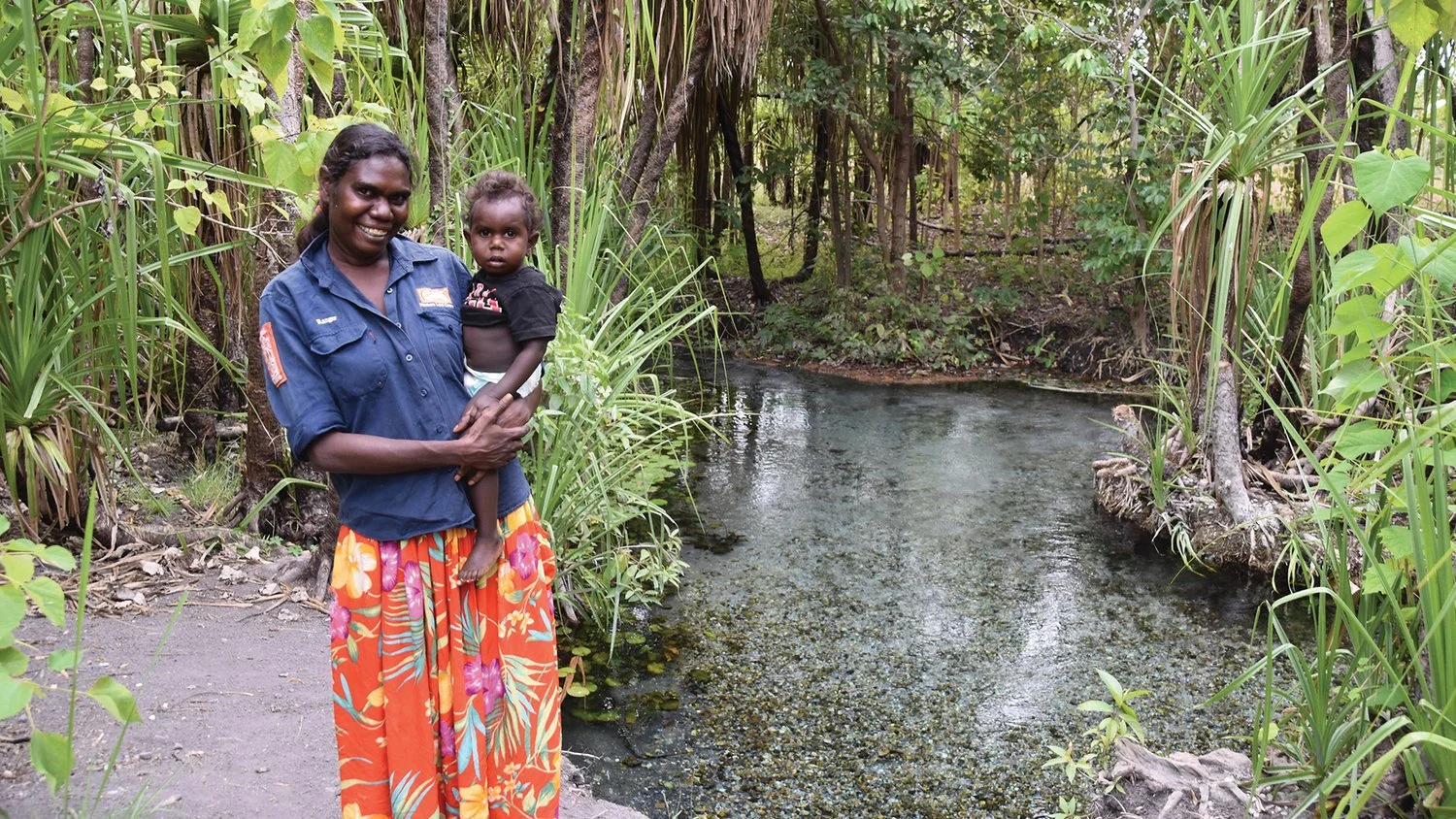
The work of Mimal Rangers is out of sight for many, but it delivers vital life services such as clean air and fresh water.
Managing the land and fire, and removing weeds and ferals keeps important plants growing strong so they can produce the very air we breathe.
Controlled burning and fighting wildfires reduces smoke and emissions, helping to ensure the air we breathe is fresh and clean, and reducing the impacts of climate change.
Removing feral animals protects springs and waterways that feed into the rivers that flow into our water supplies. Six months after feral buffalo were fenced out of Weemol Spring, the degraded wetland sprung back to life - the water became clear and clean, and native plants began to regrow over the bare and muddy banks.
Protect. Life.

Mimal Land Management’s ultimate goal is to protect country and culture.
We protect country through land, fire and water management, by managing and removing feral animals and weeds, and through working with our neighbours.
We protect culture by through supporting communities and elders to conduct ceremonies, through our language projects, by recording stories of our elders, by looking after special places and recording rock art.
Connect. Life.
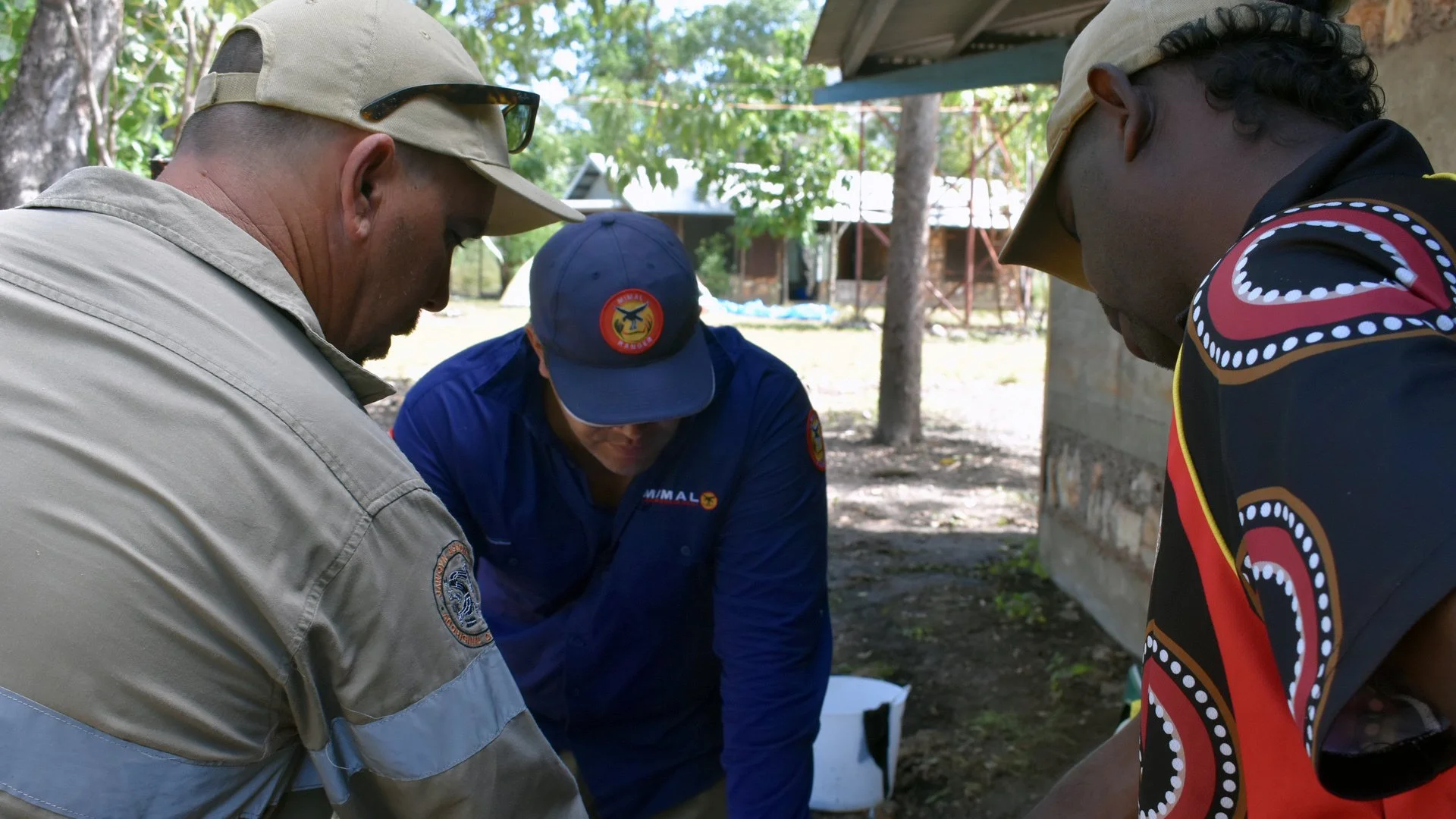
Collaborating with our neighbours has always been part of the way we work.
We’ve been working together for millenia, but nowadays we have ‘official paper ways’ of working together, through Indigenous ranger groups.
We joined forces with neighbouring Indigenous ranger groups in west Arnhem Land to create the first-ever controlled savanna burning project that was recognised by the Federal Government and has been adopted across northern Australia - and the world. This work continues with our partners under the organisation ALFA NT.
We work with our neighbours to share knowledge of country - whether its about plants and animals, weeds and ferals and shared cultural sites.
Declaring our country an IPA will help to further our collaboration and expand the footprint of protected areas in the region.
Our IPA connected corridor of parks and reserves that links Arnhem Land, Kakadu National Park and Nitmiluk National Park - making the largest protected area in Australia.
Water. Life.
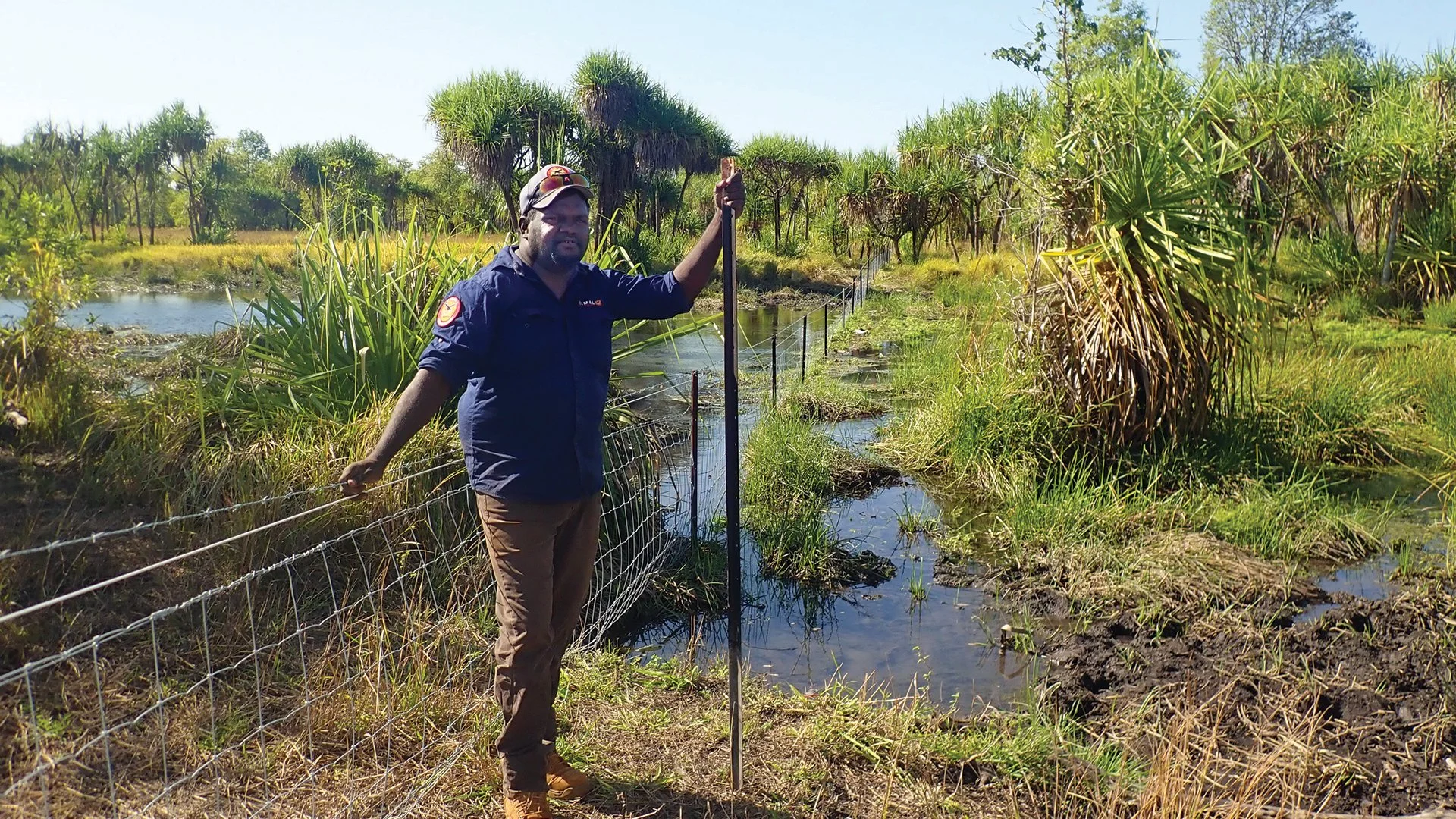
Healthy djula and wah - freshwater places - are vital and an important part of our plan in managing country.
Freshwater country is where we get bush foods like fish, turtle, lily roots, mussels and yabbies. Sometimes we find sawfish that come all the way up from the saltwater. It’s where native animals comes to drink - and we find ducks, geese and other animals in big numbers where water is healthy and clean.
Our landowners are working with us on water health issues and activities, and we’re applying a two-toolbox approach to our water management.
We’re undertaking feral animal exclusion around high value places. Feral animals foul the water, damage river banks, cause erosion and take important bush foods.
We’re also developing ranger monitoring capacity and ability to detect water weeds like Water Hyacinth (Eichhornia crassipes) and Cabomba (Cabomba caroliniana). These fast-growing weeds of significance form dense populations quickly, destroying native plants and animals, reducing water quality and restricting flow.
By 2027 we will have a program of two-way monitoring of freshwater country that demonstrates improved habitat for native species, better access for landowners and community members, who will again feel safe spending family time hunting and fishing in freshwater country.
Wild. Life.
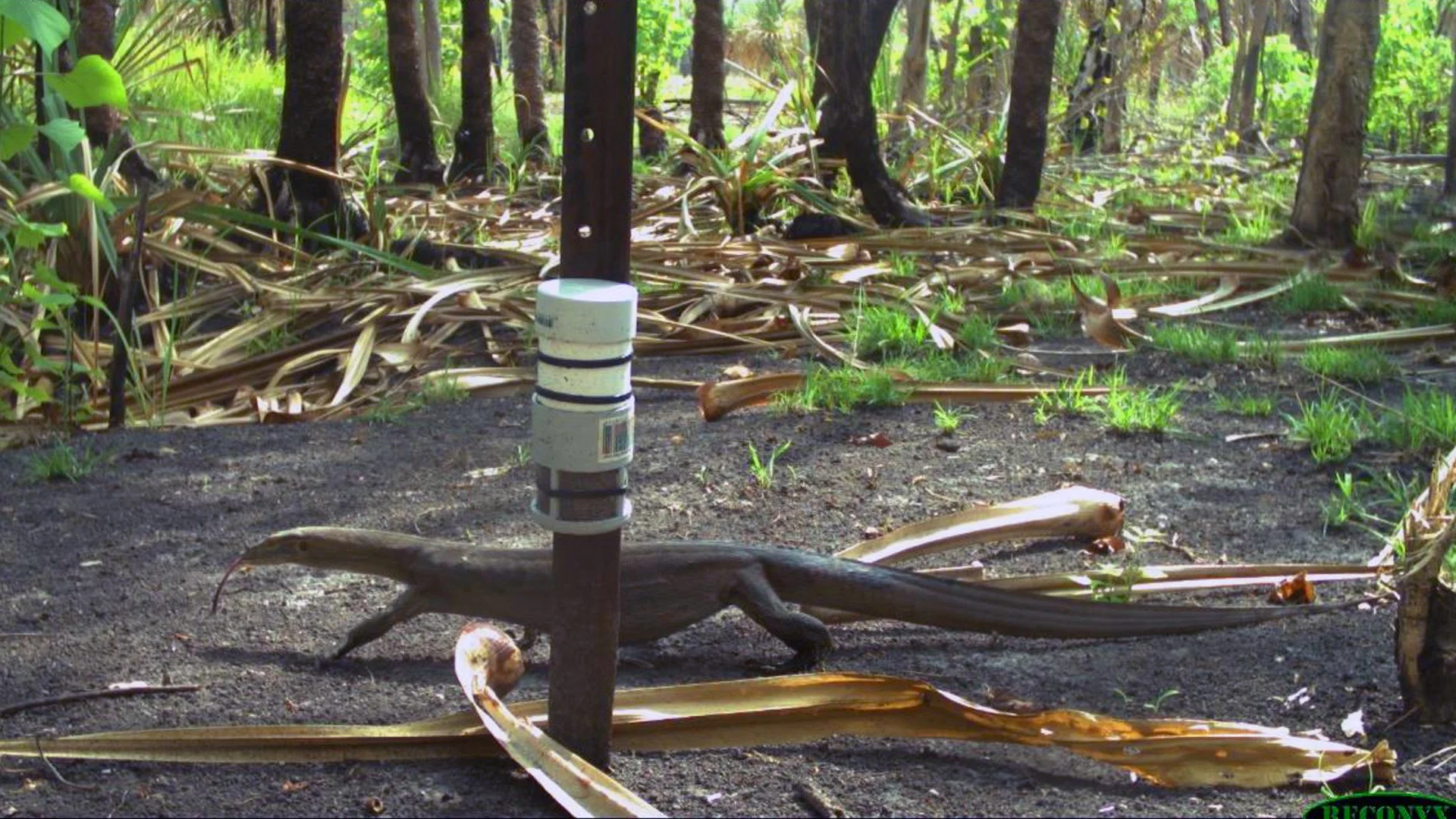
We are working to protect native animals and to eradicate ferals from our country.
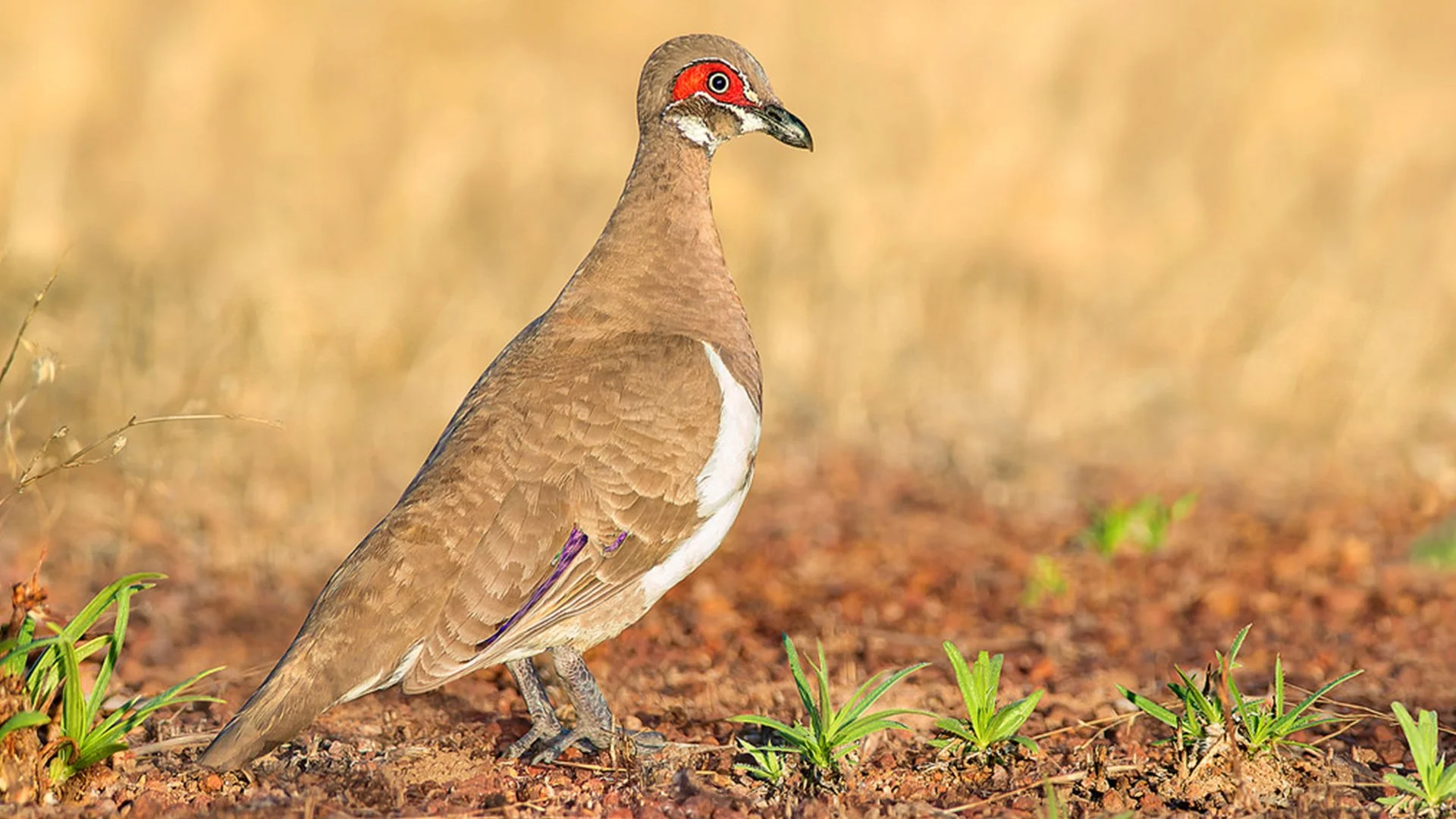
Four animals listed nationally as threatened species include the Gouldian Finch, (Erythrura gouldiae), Leichhardt’s Sawfish (Pristis pristis), Partridge Pigeon (eastern) (Geophaps smithii smithii) and the Northern Quoll (Dasyurus hallucatus).
Others animals of concern include the Black-footed Tree-rat (Mesembriomys gouldii), Emu (Dromaius novaehollandiae), Mertens’ Water Monitor (Varanus mertensi), Northern Leaf-nosed bat (Hipposideros stenotis), Oenpelli Python (Simalia oenpelliensis).
Feral animals such as buffalo, horses, donkeys, pigs, cattle and cats are a major threat to our country. They cause extensive damage across our freshwater, grassy plains and forest places. They also damage our special cultural sites.
We aim to reduce feral animals’ damaging impact through herd management, monitoring and exclusion zones.
Our native plants are important to us - they offer important habitat and give us food and medicine.
Our plant project works to protect native plant species and involves rangers, elders and landowners who work together to identify native plants, record their uses and language names, to collect seeds and revegetate important conservation areas.
Mimal also works hard to fight the spread of weeds, which are a major threat to the health of our country. Our weed management strategy targets a number of weeds including gamba grass, grader grass and mission grass.
We raise awareness of plants and weeds at the local Gulin Gulin school and community and we’ve also made videos to raise awareness about damaging weeds, like gamba

Fire. Life.

Our successful fire management program reduces greenhouse gas emissions, protects biodiversity, provides jobs for rangers and sparks new life in the landscape.
We were part of the original West Arnhem Land Fire Abatement (WALFA) group who developed the savanna burning methodology where we proved that conducting controlled, early dry season burning reduces wildfires and emissions.
Our work was adopted by the Australian Government and gives individuals and organisations the option to reduce their carbon footprint by purchasing offsets.
Importantly, this approach recognises the long-standing practice of our ancestors, who managed country for millennia through patchwork, cool burning.
We work together with our neighbours and landowners to burn the right way and we are always working to improve our approach.
Strong. Life.
Our country is a living landscape - our culture, heritage, laws and language are linked to the land.
Having cultural knowledge and respect is part of what it means to be a Mimal ranger and we support a range of activities to prepare new generations of custodians and to address our elders’ concerns about loss of knowledge of country and culture.
Our Strong Culture project focuses on increased employment connected to culture, indigenous knowledge of ecology and culture, protection of sacred places and ceremony, rock art recording and conservation, language maintenance, family and oral histories and connections to country, culture camps and walking on country, Junior Rangers and other cultural programs for children and young people.
In recent years we’ve increased opportunities for people to spend time on country, which includes supporting people to live on outstations, growing community engagement in cultural activities, ceremonies and cultural heritage and language work.
Our long term vision is to have strong knowledge, ceremony, language, dance and song connecting families, country and culture.